
Dr. Roohi Jeelani on the Secrets Doctors Know About Reproductive Health
Reproductive health is rarely discussed early enough—or holistically enough— for women facing cancer. In this episode of The SEAM Podcast, host Amy Cohen Epstein sits down with Dr. Roohi Jeelani, a double board-certified Reproductive Endocrinologist and Infertility Specialist, to unpack what doctors know—but patients are rarely told—about fertility preservation, oncofertility, longevity medicine, and women’s reproductive health across the lifespan. Drawing from her own diagnosis of PCOS, her family’s cancer history, and years of clinical experience, Dr. Jeelani shares why timing matters, how fertility and cancer care intersect, and what it truly means to treat the whole woman—not just her diagnosis.
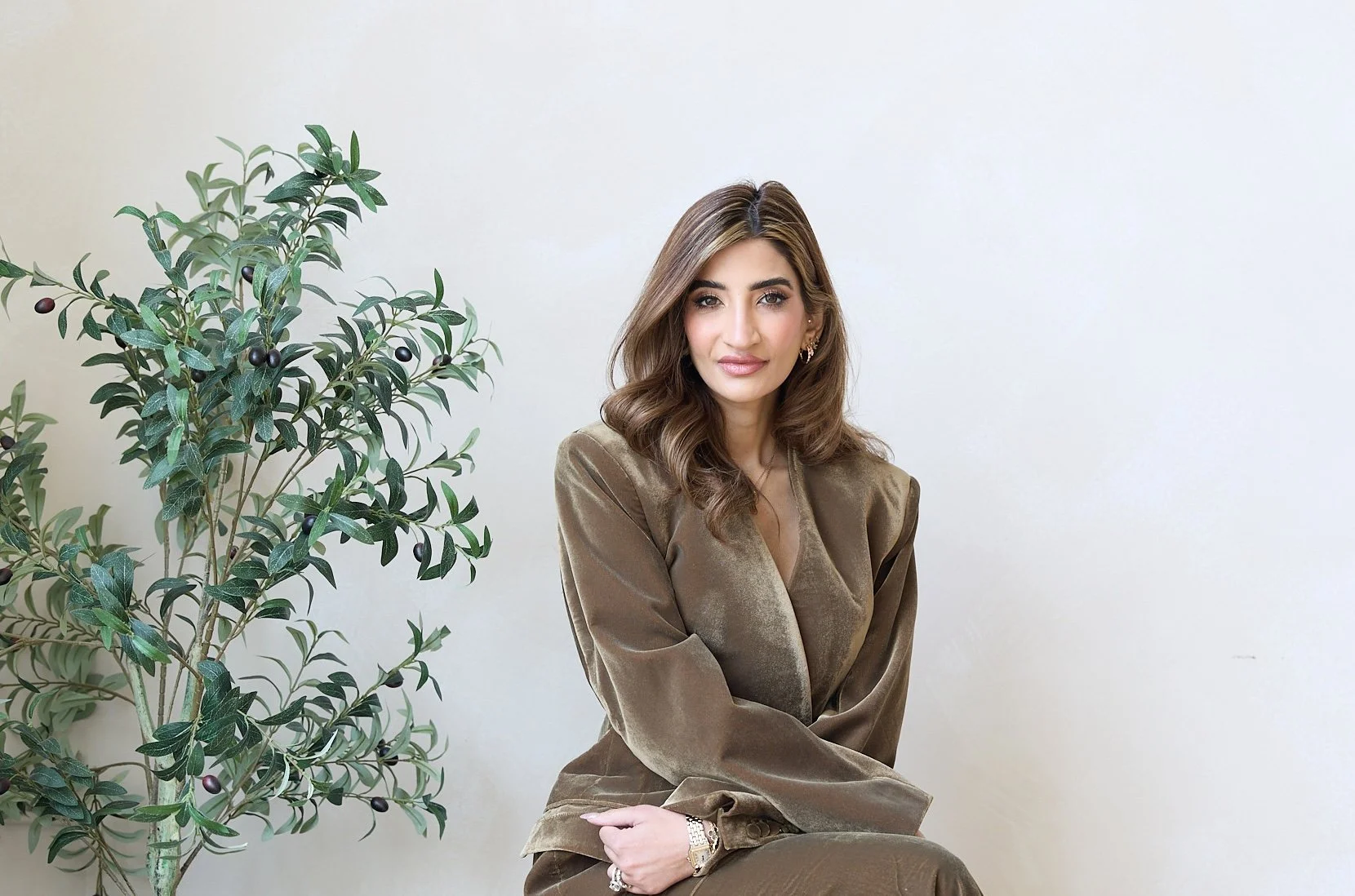
Amy Cohen Epstein: I’m so excited to be here today with Dr. Roohi Jeelani—double board-certified reproductive endocrinologist and infertility specialist. You also specialize in oncofertility, toxins and their impact on reproductive health, chemotherapy, and cryopreservation, which are of particular interest to me for obvious reasons. Thank you so much for being here. I know we rescheduled a few times, and I’m always mindful of doctors’ time. I’m really excited for people to learn about your story—personally and professionally—and how you became such an expert in this field. Can you start by sharing your journey?
Dr. Roohi Jeelani: Of course. It’s a long story, but I’m happy to share it. My parents divorced when I was about 12. My mom moved us back to Chicago, where her family lived—a big Indian family with lots of opinions. When we moved, she realized all my cousins were getting their periods and I wasn’t. She took me to pediatricians, primary care doctors—everyone said, “She’s fine, it’ll come.” Someone even suggested I was anorexic, so my mom started feeding me aggressively. I remember she’d drop me at school and stop at Burger King every morning—Dr. Pepper, a Snickers bar, a croissant sandwich. That was my breakfast.
Amy Cohen Epstein: My kids would be dead if they ate that every day.
Dr. Roohi Jeelani: I was 13, then 14, and still nothing. My mom took me to her brother, a primary care doctor, who suggested seeing a reproductive endocrinologist. I had no idea what that meant. She just took me—didn’t explain anything. I remember sitting in the waiting room, surrounded by women crying, women happy, pregnant women. This was the ’90s. The exam room had these very graphic posters—things we didn’t talk about in my culture. I was terrified. This small Indian woman walks in and introduces herself as Dr. Jabon. I was freaking out and asked her, “What do you do?”
Amy Cohen Epstein: That’s a big question for a 14-year-old to ask.
Dr. Roohi Jeelani: She smiled and said, “I make babies.” That moment changed my life. I said, “I thought God made babies. You can make babies?” She explained IVF—eggs, sperm, labs. I remember thinking, I want to be you. I didn’t even care what was wrong with me. She eventually diagnosed me with PCOS and told me I’d likely need fertility treatment one day, but all I cared about was becoming her.
…
Dr. Roohi Jeelani: I stayed focused on medicine, though I did get sidetracked briefly—I modeled, won Miss India, worked with Ralph Lauren—but my grades suffered. A counselor told me I couldn’t go to med school. I switched to a small pre-med-focused Catholic school, got serious, and eventually went to med school through a long, winding path—London, then the Caribbean at Ross University. That’s where I really learned how to study. It was hard—no resources, power outages—but it made me resilient.
…
Dr. Roohi Jeelani: During this time, my aunt was diagnosed with stage IV ovarian cancer at 43. It was everywhere—lungs, liver. They told us she had six months. She survived. Years later, she developed breast cancer. Genetic testing eventually revealed an ATM mutation. That experience changed everything for me. It made me realize how disconnected oncology and fertility care were—and still are.
Amy Cohen Epstein: That’s unbelievable. Truly.
Dr. Roohi Jeelani: Watching that made me commit to oncofertility—helping patients think not just about surviving cancer, but about life after. Fertility, hormones, menopause, quality of life. No one was addressing that.
…
Amy Cohen Epstein: Have the women in your family considered preventive surgeries?
Dr. Roohi Jeelani: Yes. Some of my aunts have had double mastectomies or hysterectomies. My mom hasn’t—she’s terrified of anesthesia. Everyone has their thing.
…
Amy Cohen Epstein: Your story is extraordinary. It really feels like a documentary.
Dr. Roohi Jeelani: I’m lucky to do what I love.
…
Amy Cohen Epstein: Let’s talk about your work with cancer patients. How do you approach fertility preservation?
Dr. Roohi Jeelani: I realized patients were coming to me after chemo. So I started intervening earlier—working directly with oncologists, surgeons, radiologists. I go to tumor boards and say, “When you diagnose a reproductive-age patient, here’s my card.” We need same-day fertility appointments, random-start cycles, and financial accommodations. Fertility shouldn’t be another burden during cancer.
Amy Cohen Epstein: And why is the two-week window so critical?
Dr. Roohi Jeelani: A typical egg-freezing or IVF cycle takes about 10–12 days. My first question to oncologists is always, “Do I have two weeks?” If yes, we move immediately. No one starts chemo the next day anyway.
…
Dr. Roohi Jeelani: I faced a lot of pushback at first. Doctors said it wasn’t important, or it wasn’t covered. But Illinois passed fertility preservation mandates, and one by one, the excuses disappeared.
Amy Cohen Epstein: I just threw your seventh excuse in the trash.
Dr. Roohi Jeelani: Exactly.
…
Amy Cohen Epstein: I think removing hope from a woman during cancer treatment is devastating. Giving her something to hold onto matters.
Dr. Roohi Jeelani: Absolutely. That future-thinking helps them survive the present.
…
Amy Cohen Epstein: Let’s shift to longevity. How does that intersect with fertility?
Dr. Roohi Jeelani: I went through my own fertility journey with PCOS. I didn’t have my first child until 32. It wasn’t until I changed my lifestyle—nutrition, inflammation, metabolic health—that things shifted. I later conceived my daughter spontaneously. That opened my eyes to systemic inflammation and root-cause medicine.
…
Dr. Roohi Jeelani: Longevity isn’t about living to 120. It’s about living better—mentally, physically, hormonally. I now incorporate peptides, NAD, glutathione, lifestyle counseling. I treat the whole person, not just the ovaries.
Amy Cohen Epstein: That marriage between medicine and lifestyle is where the magic happens.
…
Dr. Roohi Jeelani: Before I tell someone they need a donor egg or another intervention, I want to know I’ve left no stone unturned. Patients deserve that autonomy.
…
Amy Cohen Epstein: What’s next for you?
Dr. Roohi Jeelani: Education. Empowering other doctors to try this approach. Even if it just gives patients hope, that alone can change everything.
Amy Cohen Epstein: Hope is everything. This was phenomenal. Thank you for the work you do—bringing life into the world and changing how we care for women.
Dr. Roohi Jeelani: Thank you for having me.
Editor’s Note: This interview has been edited for length, clarity, and readability.